A formation is your team's default shape — where your players stand when the game resets. It doesn't decide matches on its own, but the right shape makes your team's strengths easier to use and its weaknesses easier to hide. Here's what each popular formation actually does, and when to use it.
4-3-3 — control and width
The modern possession formation, used by sides like Manchester City and Barcelona at their peak. Two wingers stretch the pitch, a front three presses high, and the midfield triangle (one holder, two eights) gives you passing angles everywhere.
- Strengths: width in attack, natural pressing structure, midfield control.
- Weaknesses: full-backs get exposed if wingers don't track back; the lone pivot can be overrun.
- Use it when: you have quick wingers and technical midfielders who want the ball.
4-4-2 — balance and simplicity
The classic. Two banks of four are easy to organise, hard to break down, and every player knows their job. The strike partnership gives you an out ball and someone to feed off knock-downs.
- Strengths: defensive solidity, simple roles, great for counter-attacking.
- Weaknesses: can be outnumbered 3v2 in central midfield against a 4-3-3 or 4-2-3-1.
- Use it when: you want organisation over the ball, or you have two strikers who work well together.
4-2-3-1 — the safe modern default
Two holding midfielders protect the back four while a No.10 links play behind a lone striker. It's the most common shape in professional football because it's solid without being passive.
- Strengths: central security, a free role for your most creative player.
- Weaknesses: the striker can get isolated; needs energetic wide players.
- Use it when: you have one standout playmaker you want on the ball between the lines.
3-5-2 — midfield numbers and wing-backs
Three centre-backs let your wing-backs push high and act as the team's width, while two strikers keep the opposition centre-backs occupied. A favourite for teams that want to dominate the middle.
- Strengths: extra midfield body, two strikers, aggressive wing play.
- Weaknesses: wing-backs need elite fitness; wide areas behind them are the weak spot.
- Use it when: your full-backs are your best athletes and you lack natural wingers.
3-4-3 — front-foot football
Antonio Conte's Chelsea made it famous: a back three, flat midfield four, and a fluid front three. It commits players forward while the back three sweeps up behind.
- Strengths: attacking overloads, aggressive pressing, flexible front line.
- Weaknesses: demands very disciplined central midfielders; transitions can be chaotic.
- Use it when: you're the stronger side and want to pin teams back.
Quick comparison
| Formation | Best for | Watch out for |
|---|---|---|
| 4-3-3 | Possession & pressing | Exposed full-backs |
| 4-4-2 | Organisation & counters | Midfield overloads |
| 4-2-3-1 | Balance + a No.10 | Isolated striker |
| 3-5-2 | Midfield control | Space behind wing-backs |
| 3-4-3 | Attacking dominance | Defensive transitions |
Test formations on a real pitch — free
Reading about shapes only gets you so far. The fastest way to understand a formation is to build it: put real players in it, drag them around, and see where the gaps appear. The My Lineup app has every formation above as a one-tap preset, plus drag-and-drop for your own hybrid shapes.
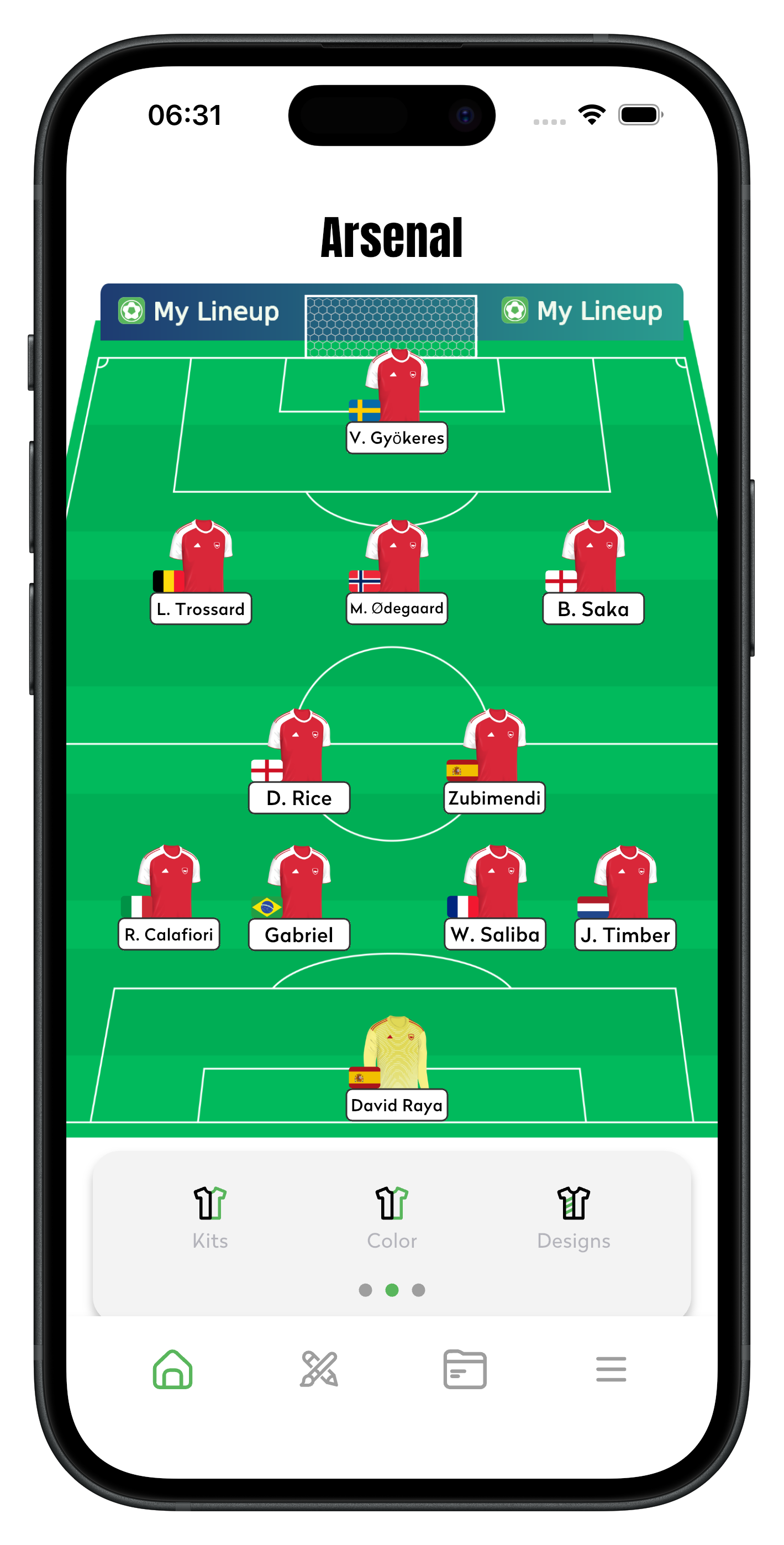

Try every formation in My Lineup
Free formation creator with 20,000+ real players. Build a 4-3-3, switch to 3-5-2, compare — in seconds.