7-a-side sits in the sweet spot between the chaos of fives and the structure of full-size football. You have enough players for real defensive lines and midfield play, but every player still touches the ball constantly. That makes your formation choice genuinely tactical — here are the three shapes that dominate 7v7, and how to choose.
2-3-1 — the balanced classic
Two defenders, three midfielders, one striker. The 2-3-1 is the most popular 7-a-side formation for a reason: it covers every zone, the wide midfielders give you width in attack and cover in defence, and the roles are easy to understand — which is why it's also the standard shape in youth 7v7.
- Strengths: balance everywhere, natural width, simple to coach.
- Weaknesses: wide midfielders need engines; a lazy winger leaves your defender 1v2.
- Use it when: in doubt. It's the best default in 7-a-side football.
3-2-1 — the pyramid
Three defenders, two midfielders, one striker. A solid, hard-to-beat setup where the middle centre-back can step into midfield when you have the ball.
- Strengths: very hard to break down, comfortable playing out from the back.
- Weaknesses: your striker can get isolated; you need midfielders who arrive in the box.
- Use it when: facing stronger opposition, or your defenders are your best players.
3-1-2 — direct and dangerous
Three at the back, one pivot, two strikers. The 3-1-2 gets the ball from back to front fast and keeps two forwards in tandem — one to pin defenders, one to run in behind.
- Strengths: two-striker threat, quick transitions, solid base.
- Weaknesses: no natural width; the lone pivot does a lot of running.
- Use it when: you have two good finishers and a tireless central midfielder.
Which 7-a-side formation should you pick?
| Situation | Formation |
|---|---|
| Default / balanced squad | 2-3-1 |
| Underdog or protecting a lead | 3-2-1 |
| Two strong strikers | 3-1-2 |
| Chasing a goal late on | 2-3-1 with the wide mids pushed high |
Plan your 7v7 lineup before matchday
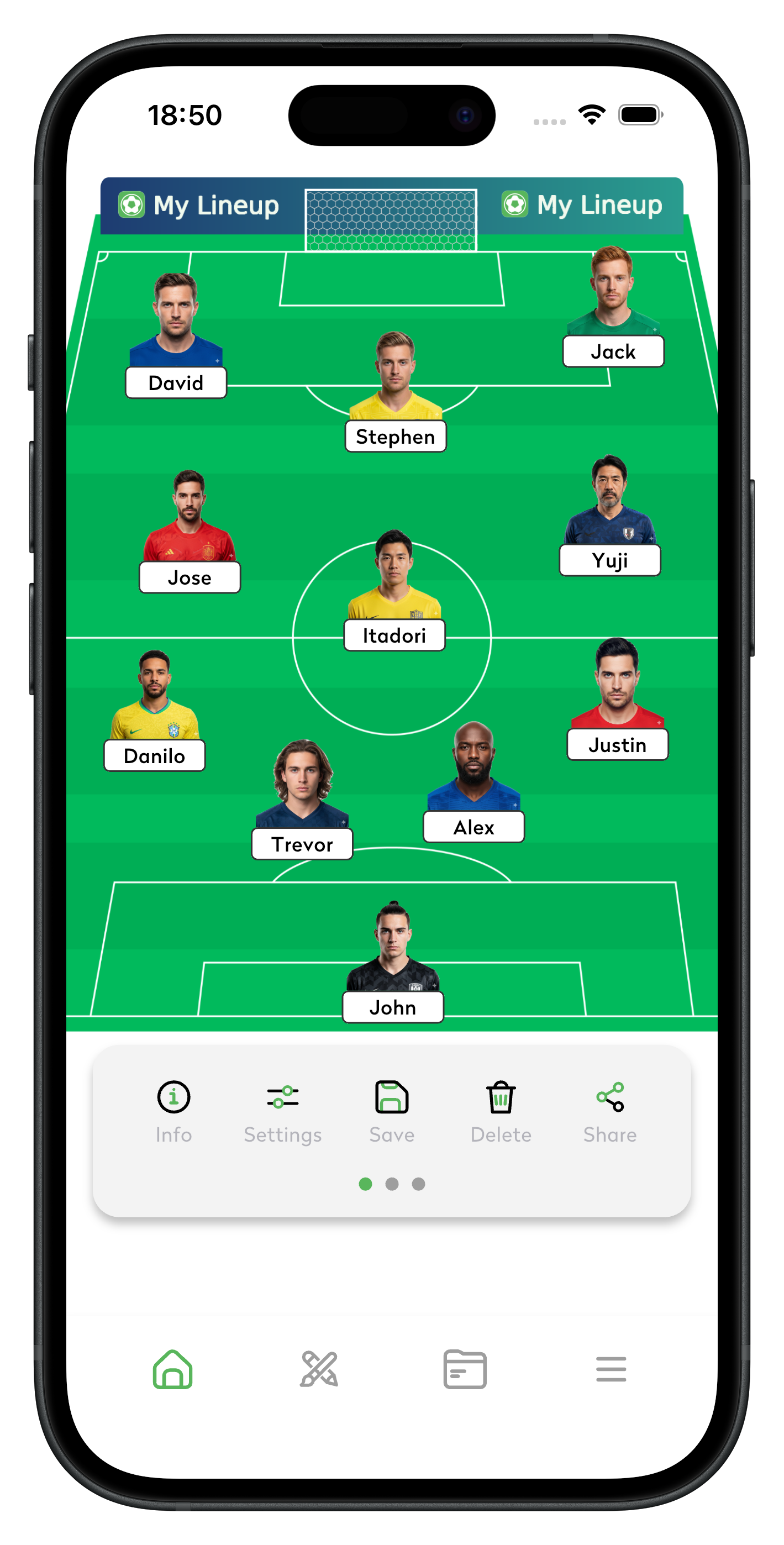
The difference between a formation on paper and on the pitch is whether everyone knows their role. With My Lineup you can set the team size to 7-a-side, add your squad as custom players with names and photos, arrange them in a 2-3-1 (or anything else), and share the lineup image to the team group before the game.

Plan your 7-a-side team free
Set team size to 7v7, add your squad, pick your shape and share it in seconds.